






 Email this article
 The Influence of Cascading, E-Planning, and E-Budgeting on the Effectiveness of Budget Absorption in Bekasi City Government Agencies: Human Resource Competence in Financial Management as a Mediating Variable and Budget Planning Quality as a Moderating Variable
Abstract
Keywords
Full Text:
PDFReferences
Anfujatin, N. (2016). Analisis faktor-faktor yang mempengaruhi penyerapan anggaran belanja daerah. Jurnal Ekonomi dan Kebijakan Publik, 7(2), 115–128.
Becker, G. S. (1964). Human Capital: A Theoretical and Empirical Analysis, with Special Reference to Education. New York: Columbia University Press.
CosmoGov. (2023). Implementasi e-planning dalam tata kelola pemerintahan daerah. CosmoGov Policy Brief, 5(1), 12–20.
Davis, F. D. (1989). Perceived usefulness, perceived ease of use, and user acceptance of information technology. MIS Quarterly, 13(3), 319–340.
DeLone, W. H., & McLean, E. R. (2003). The DeLone and McLean model of information systems success: A ten-year update. Journal of Management Information Systems, 19(4), 9–30.
Hiola, A. (2023). Fenomena keterlambatan penyerapan anggaran di pemerintah daerah. Jurnal Administrasi Publik Indonesia, 12(1), 45–56.
Iqbal. (2022). Pengaruh perencanaan anggaran dan kompetensi SDM terhadap penyerapan anggaran. Jurnal Akun Nabelo, 5(2), 77–88.
Mait, R., Suryanto, & Hidayat, A. (2020). Implementasi e-planning dalam perencanaan pembangunan daerah. Jurnal Administrasi Publik, 15(1), 45–57.
Mulyani, S. (2021). Pola pencairan anggaran dan dampaknya terhadap kualitas program. Jurnal Kebijakan Fiskal, 9(2), 101–115.
Rafiqi, M., & Selviyanti, R. (2021). Pengaruh penerapan e-budgeting terhadap transparansi dan akuntabilitas pengelolaan keuangan daerah. Jurnal Akuntansi dan Keuangan Daerah, 6(2), 87–99.
Rahayu, S., Pratama, Y., & Nugroho, D. (2023). Efektivitas sistem e-planning dalam mendukung perencanaan pembangunan daerah. Jurnal Kebijakan Publik, 12(1), 33–47.
Safriansyah, M., Putra, H., & Lestari, D. (2023). Cascading kinerja dalam meningkatkan efektivitas perencanaan dan penganggaran. Jurnal Manajemen Publik, 8(3), 201–215.
Sanjaya, R., Dewi, T., & Prasetyo, B. (2025). Digitalisasi penganggaran melalui e-budgeting: Dampak terhadap tata kelola keuangan daerah. Jurnal Teknologi Informasi Pemerintahan, 10(1), 55–70.
Sudarwati, N., Santoso, B., & Wibowo, A. (2017). Analisis penyerapan anggaran belanja daerah pada triwulan IV. Jurnal Ekonomi dan Pembangunan Daerah, 8(2), 67–78.
UNDP. (1997). Governance for sustainable human development: A UNDP policy document. New York: United Nations Development Programme.
Venkatesh, V., Morris, M. G., Davis, G. B., & Davis, F. D. (2003). User acceptance of information technology: Toward a unified view. MIS Quarterly, 27(3), 425–478.
Zulaikah, E., Hartono, & Sari, R. (2019). Pola penyerapan anggaran daerah dan implikasinya terhadap kinerja OPD. Jurnal Ekonomi dan Kebijakan Publik, 10(1), 55–66.
DOI: https://doi.org/10.32535/ijabim.v10i3.4558
Refbacks
- There are currently no refbacks.

Copyright (c) 2026 Idel Eprianto, Jhonni Sinaga

This work is licensed under a Creative Commons Attribution-NonCommercial-ShareAlike 4.0 International License.
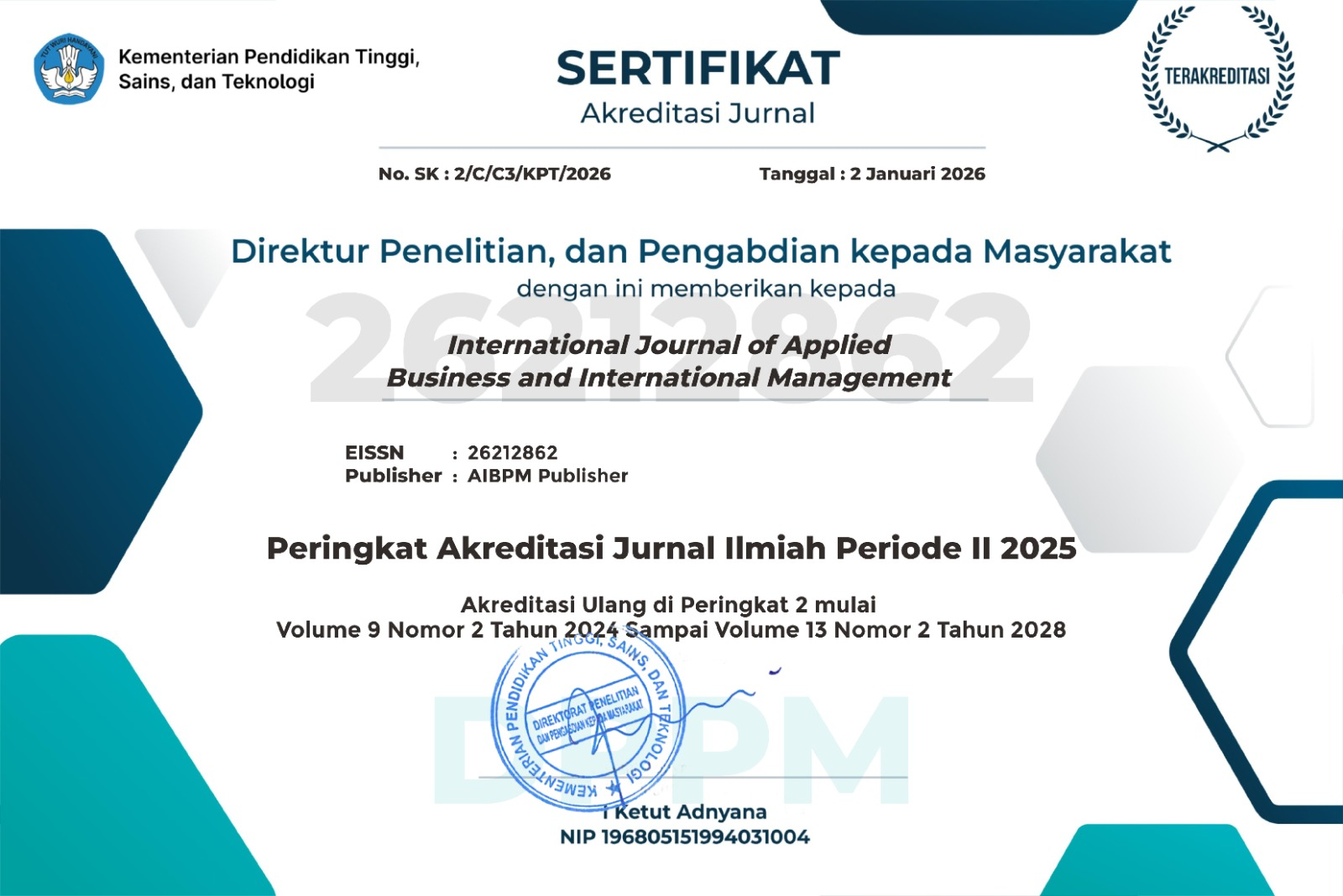
International Journal of Applied Business and International Management (IJABIM)
ISSN 2614-7432 (Print) | ISSN 2621-2862 (Online)
DOI Prefix: 10.32535 by CrossRef
Published by AIBPM Publisher
JL. Kawi No. 23, Bareng, Kec. Klojen, Kota Malang, Jawa Timur, Indonesia
Email: journal.ijabim@gmail.com
Phone: +62 341 366222
Website: https://aibpmpublisher.com/
Governed by
Association of International Business and Professional Management
Email: admin@aibpm.org
Website: https://www.aibpm.org/


Licensing Information

The International Journal of Applied Business and International Management (IJABIM) is licensed under a Creative Commons Attribution-NonCommercial-ShareAlike 4.0 International License .
Follow Us:

